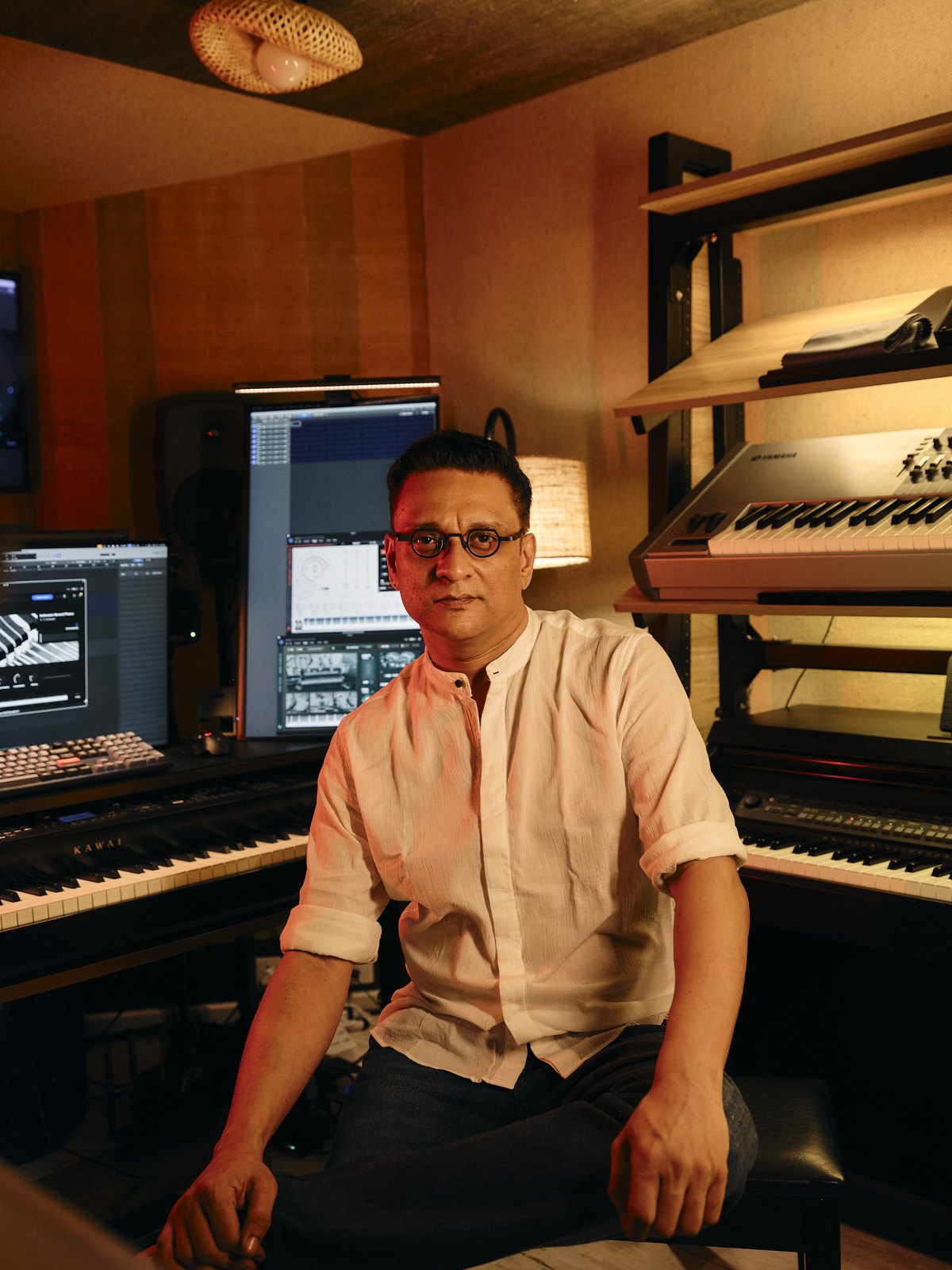
He did not go looking for music. Music found him. Every time he tried to walk away — fielding at the cricket pitch, cracking his fingers between overs — the piano found him again.
It began there, at the piano and a bank of analogue keyboards, where discipline, curiosity and emotion first became a language. His first paycheck came at twelve. Ever since, it has been a journey spent looking forward — and only ever looking back to find the lower notes on the piano.
Trained in classical piano and orchestral studies, and mentored early by the keyboardist, synth guru, music producer and composer Viju Shah, Rohit learned sound from the circuitry up. For close to fifteen years he was the programmer behind India’s most respected composers — the one taking the basic tune the composer hummed and turning it into the song you remember. A sizeable share of a generation’s film music passed across his keyboards before it ever reached an audience.
He is also a lifelong student of where music comes from — Hindi film melody on the surface. At the crux are the thaats and ragas, and empowering those are the Vedas and Upanishads. A melody, he will tell you, is not invented so much as found. The craft is in hearing it clearly, and then having the discipline to leave it alone.